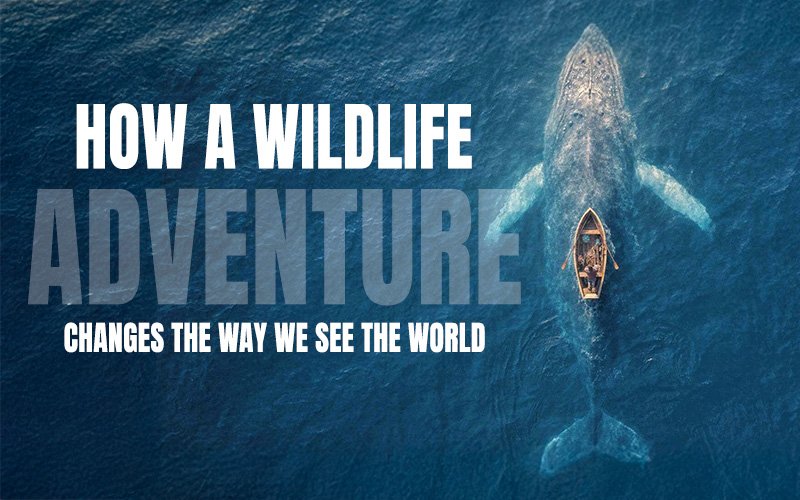
A wildlife adventure is any close, unscripted encounter with an animal in its natural habitat. A deer on a quiet trail. A whale close to your boat. A fox that won’t move off your lawn. These moments matter because they interrupt routine thinking and create a real sense of connection to the natural world, often shifting how people see conservation, travel, and even themselves.
Doesn’t need to be that dramatic, either. Could be a whale surfacing next to your boat, a fox not moving off your lawn at dusk, a hawk that lands closer than it should and just hangs out.
None of it takes long, but lodges itself somewhere. You think about it a day later, while you’re doing other things
Why It Hits This Hard
It’s worth thinking about, honestly, more than you’d expect. Your average day is basically the same fifteen decisions, same inbox, coffee, etc. Wildlife doesn’t know that routine exists and doesn’t care. That’s the reason it works on us. Animals don’t know that routine exists and don’t care that it exists, and that’s likely the actual reason it works on us. You bump into one, maybe on an adventure wildlife tour, maybe just dumb luck near your house, and suddenly the loop breaks.
There’s actual research on this too, if you want to go down that rabbit hole. Awe researchers keep landing on more or less the same thing: it makes you feel small, but in a good way. That constant voice in your head narrating your life goes quiet for a minute.
What’s Actually Happening In Your Head, Probably
Talk to enough people who’ve had a real African wildlife adventure, and it’s basically the same story every time, weirdly consistent. First, a jolt; your body clocks it before your brain does. Then this stillness where blinking somehow feels risky. And then later, could be hours, could be the next day, this quiet realization sneaks in that it meant something.
That last thought is the interesting one to me. One solid encounter and someone’s whole attitude toward conservation can shift. Or travel. Or, and I know this sounds like a stretch, their sense of where they fit into everything. Reading a number about an endangered species doesn’t do that. Watching the actual animal go about its business, totally oblivious to you standing there, does.
Why This Sticks Better Than Facts Ever Could
Conservationists have known this for a while now; knowing about wildlife and actually caring about it are two different animals (sorry, couldn’t resist). Real wildlife travel experiences close that gap much faster than any documentary, mainly because they turn something abstract into something you actually felt in your chest.
| Type of Exposure | Emotional Pull | Likely Long-Term Effect |
| Reading an article | Distant, informational | Forgotten within a week |
| Watching a documentary | Engaging but passive | Mild interest, fades fast |
| An actual wildlife adventure | Personal, sometimes emotional | Real empathy, repeat visits |
Not a coincidence that ethical wildlife tourism has grown so much lately. Operators running safari adventure experiences and small wildlife photography adventure trips figured this out years ago. One respectful, close encounter shifts a traveler’s attitude more than months of guilt-trippy campaigns ever could. The same visiting reason for wildlife conservation travel keeps climbing. People protect what they’ve felt something for. Nobody fights hard for a spreadsheet.
A Weird Little Bonus Nobody Talks About
Patience. That’s the bonus. A lot of travelers come home saying they feel calmer, more observant, and slower to react to petty stuff that used to set them off. Watching an animal move through its natural habitat, hunting, foraging, keeping half an eye on its young the entire time, teaches you something about attention that a desk job just can’t.
Funny enough, that same idea shows up outside of nature too: staying grounded when everything around you is unpredictable. Douglas P. Andonian gets into this in his book From Where Lions Speak, tying that kind of composure to how the strongest leaders actually hold up under pressure.
That connection between wildlife and leadership isn’t a one-off idea, either. It’s something we return to again and again. Keep visiting Douglas P Aandonian for more insights like this.
You Don’t Need a Plane Ticket For This
You don’t need a full guided African safari to feel any of it, for what it’s worth. Ordinary spots do the job just fine.
- A local park at sunrise, before the joggers take over
- A slow walk along a wetland or riverbank
- Your own backyard feeder, phone left inside for once
- A quiet trail on a random weekday, no crowds around
Size doesn’t matter here. Rarity barely does either. What actually matters is whether you’re paying attention or just walking through it half-asleep.
Final Thought
A wildlife adventure changes how you see the world because it asks for something most of us stopped handing over freely a while ago: real, undivided attention. A fleeting glance from a fox, an afternoon spent watching an animal move through its own habitat- it doesn’t take much more than that. These moments quietly reshape how connected we feel. To nature. To other people. And sometimes, to ourselves.
Want more stories like this? Check out “7 Things Nature Teaches Us About Fear and Courage” for another look at what the wild has to show us.
FAQs
Pretty much any direct run-in with a wild animal in its natural habitat could be a guided safari, or it could just be a quiet morning watching birds by your house.
They tap into awe, and awe has this way of quieting self-focused thinking while making you feel more connected to everything around you.
It genuinely can. People build empathy faster through direct experience than through passive learning, which usually ends up pulling them toward wildlife conservation travel eventually.
Not even close. A local park or a backyard feeder can do it just fine. Distance matters a lot less than patience does.