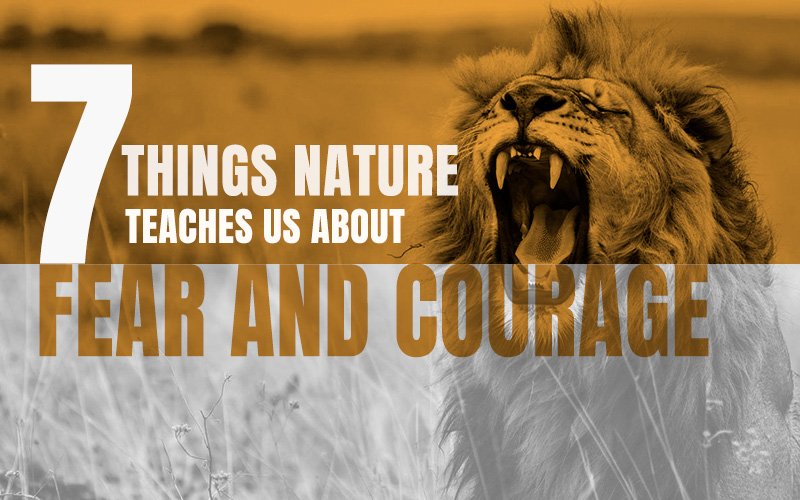
Fear and courage are two human emotions that do not necessarily oppose each other, as some might think. They exist as a team. One encourages the other. Most often, nature brings this to light.
The wilderness breeds uncertainty every day. Wildlife must face that, adapt to it, and move forward, not waiting for the fear that might evolve to vanish. There are lessons for all to learn from this.
The American Psychological Association says, people who spend more time with nature have less stress and keep strong mental resilience. Many other researchers also say regular outdoor activities help people develop a fear vs courage mindset. They easily learn how to fight with fear by knowing how to carry it.
Most of us never think about what fear is, before it arrives. An uncomfortable situation can, and most often will, appear suddenly, with no warning. Deciding what to do can be daunting. A moment that reminds us just how little we control. A connection to nature can alleviate much of what’s seen as threatening and more of what should be embraced. Have you read our earlier piece “How Meaningful Adventures Shape Personal Transformation”? If not, you must. You’ll clearly see the connection. Adventure encourages people to first walk through fear, not around it.
Nature Never Pretends Fear Doesn’t Exist
Observe wildlife long enough and you will see one thing become obvious.
Nothing behaves as if danger has permanently disappeared. A deer often pauses before navigating an open field. Birds become silent when they hear anything unusual or something nearby feels wrong. Even the strongest of predators move cautiously at times.
Fear serves a profound purpose. We (humans) are not immune from it. Most often it protects us from something real. It can, however, prevent us from doing things we actually need to do.
Telling the difference between those two is one of the most challenging aspects of being human. That’s why fear and courage exist as a team. Courage doesn’t arrive following the disappearance of fear. It shares a space, even as fear seems to dominate the moment.
Panic Makes Everything Worse
Think about a quiet forest or an equally serene expanse of bush
Everything looks calm. Then something shifts. A sound. Movement in the grass. Animals react quickly but not carelessly. They pause, read the situation, then move. Very few waste energy panicking.
People tend to make their worst decisions when fear transitions to panic. Thoughts become conflicted with reality. Decisions become hurried.
Overcoming fear through exposure to nature often begins with recognizing that aforementioned quality within yourself. The outdoor natural environment quiets your mind, encouraging it to think before reacting. Whether you’re involved in a difficult conversation or experiencing an unexpected setback, it requires that you think with calm as opposed to being reactive.
Most days nature can serve to be the quiet catalyst to achieving the goal.
Real Courage Is Quieter Than It Looks
Films have given courage a particular image. Big speeches. Someone running toward danger. Grand gestures at the right moment.
Real courage rarely looks like that.
Most of the time it’s quiet. Getting back up after something didn’t work. Trying again when the first attempt failed. Walking into something uncertain because it matters, even without any guarantee about how it ends.
This is one of the clearest courage lessons from wilderness. Animals don’t wake up believing nothing bad could happen. They just keep doing what they need to do, carrying the uncertainty with them.
You don’t have to eliminate fear before taking the next step. Sometimes you just bring it along. And strangely, that turns out to be enough.
Being Outside Changes Something
People often describe feeling lighter after time spent outdoors and there’s probably a real reason for that.
The noise gets smaller. Notifications stop. Your attention shifts to simpler things. Wind in trees. Water moving somewhere nearby. Without trying, the mind gets quieter too.
This connection between nature and mental courage isn’t about becoming brave overnight. It’s about creating enough mental space to think differently about what’s actually scaring you. Sometimes the clarity people have been chasing for weeks shows up after a long walk outside. Not because the problem disappeared but because the mind finally had room to see it properly.
Fear Feels Different Outside
There is something specific about facing fear outdoors that changes how it feels.
Standing on a narrow trail. Hearing an unexpected sound. Watching the weather roll in faster than expected. None of those things automatically mean danger, but they ask you to stay present with what is actually happening right now.
That’s very different from the fear most of us carry at home. We worry about things that haven’t happened. We replay old conversations. We build the worst version of something before it even starts.
Within nature, the mind tends to remain with what is real, changing your relationship with it. That shift is more useful than one might think.
Small Moments Build Something Bigger
People expect courage to arrive fully formed. It almost never does.
It builds through small moments instead. One more step when you want to stop. Staying calm when everything in you wants to react. Trying something you nearly talked yourself out of completely.
Those moments add up quietly. Gradually something shifts inside. You stop thinking you can’t and start thinking maybe you can. That change is bigger than it sounds.
Nature works exactly this way. Trees don’t grow overnight. Rivers shape stone across years not hours. You conquer fear with nature not by facing one enormous thing but by accumulating small honest moments of continuing anyway. You don’t need to stay in the wilderness for days. Only a brief contact with green spaces can also work.
According to the American Heart Association, people who spend 120 minutes a week notice a measurable improvement in their overall health and ease in stress management.
Some things the wilderness keeps demonstrating whether we’re paying attention or not. Fear is normal. Patience works better than panic. Strength comes from experience, not from avoiding difficulty.
Staying Too Comfortable Shrinks Your World
There is nothing wrong with enjoying comfort. The problem exists when it becomes the only place you’re willing to stay.
After a while even small changes start feeling threatening. Familiar things feel like the only safe things. The world quietly gets smaller without you deciding it should.
Nature doesn’t allow this. Seasons change. The weather shifts without asking. Animals have only two options. Either they adapt or migrate. People grow in the same way, not by chasing unnecessary risk but by saying yes to things that matter even when saying yes feels uncomfortable.
Many stories about fear and courage begin with someone agreeing to something they almost declined. Looking back, they realize that one quiet decision changed more than they expected.
What Stays With You
Books like “From Where Lions Speak” connect with readers because they don’t treat wilderness as background scenery.
Douglas P. Andonian writes from real experience. His time in Africa wasn’t only about watching wildlife. It became a way of understanding fear, stillness, and himself in ways that ordinary daily life never offered. That’s something most people relate to even when their own experiences look completely different.
Final Thoughts
Most people spend enormous energy trying to avoid fear entirely.
Nature keeps suggesting something else. Accept that it will show up. Listen when it’s genuinely protecting you. Question it when it’s only holding you back from something that matters.
Then keep going forward. Not without fear, just forward.
Frequently Asked Questions
Research suggests it can. Time outdoors lowers stress and creates mental space to respond to fear more clearly rather than react to it immediately.
That it’s not about the absence of fear. It’s about continuing to move and adapt even when uncertainty is sitting right beside you.
Because they place people in unfamiliar situations where they make real decisions and solve real problems. That builds confidence in a way comfortable situations rarely do.
They almost always exist together. Courage isn’t what you feel after fear disappears. It’s what happens when you choose to keep moving while the fear is still present.